House or a portfolio for €750,000? Most would surprisingly opt for the second option.
House or a portfolio for €750,000? Most would surprisingly opt for the second option.
The second event in the “From Saver to Investor” series highlighted the reasons for delaying investing (fear, lack of knowledge) and the importance of financial literacy. The speakers emphasized the impact of inflation, the accessibility of investing, and the advantages of a diversified portfolio.
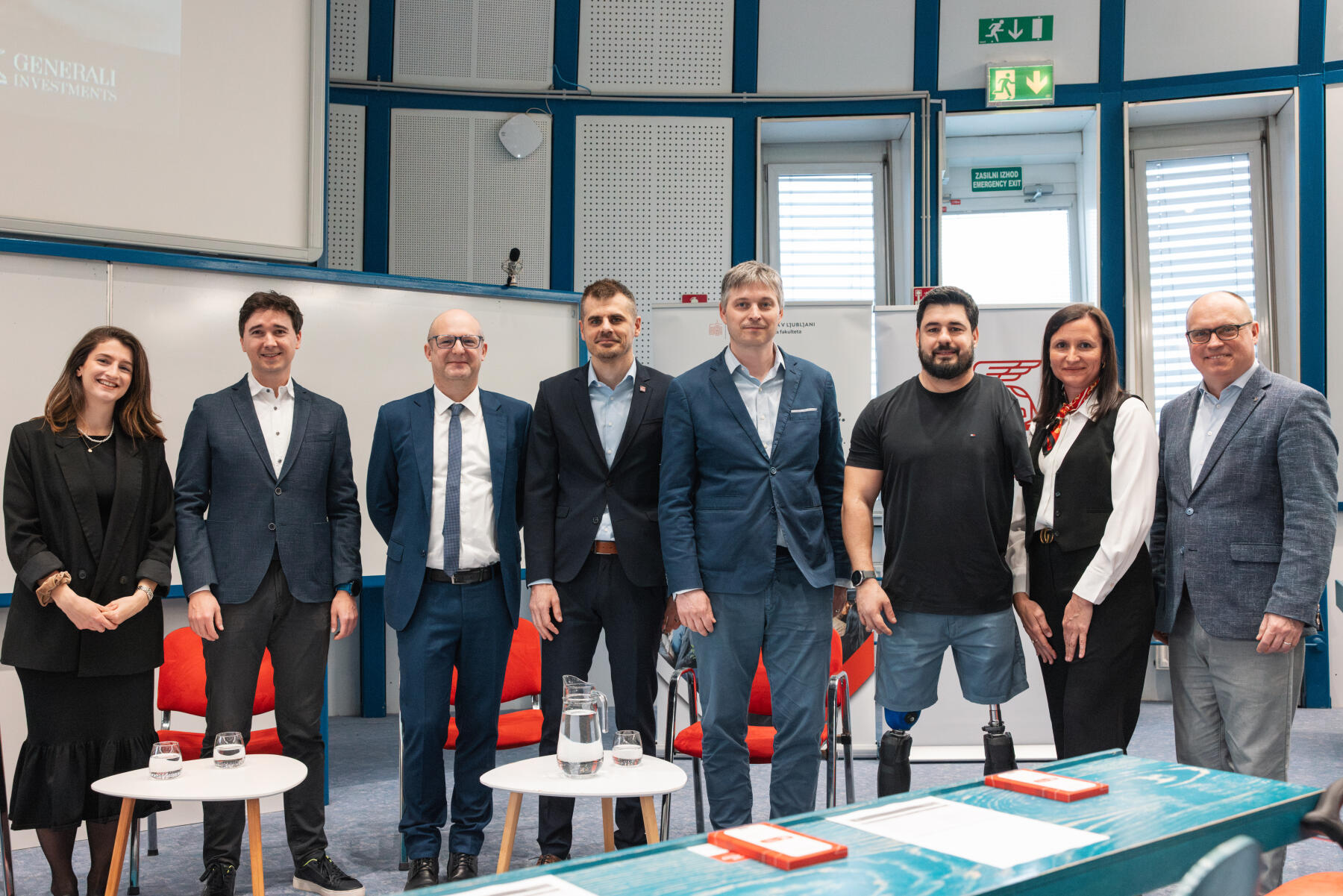
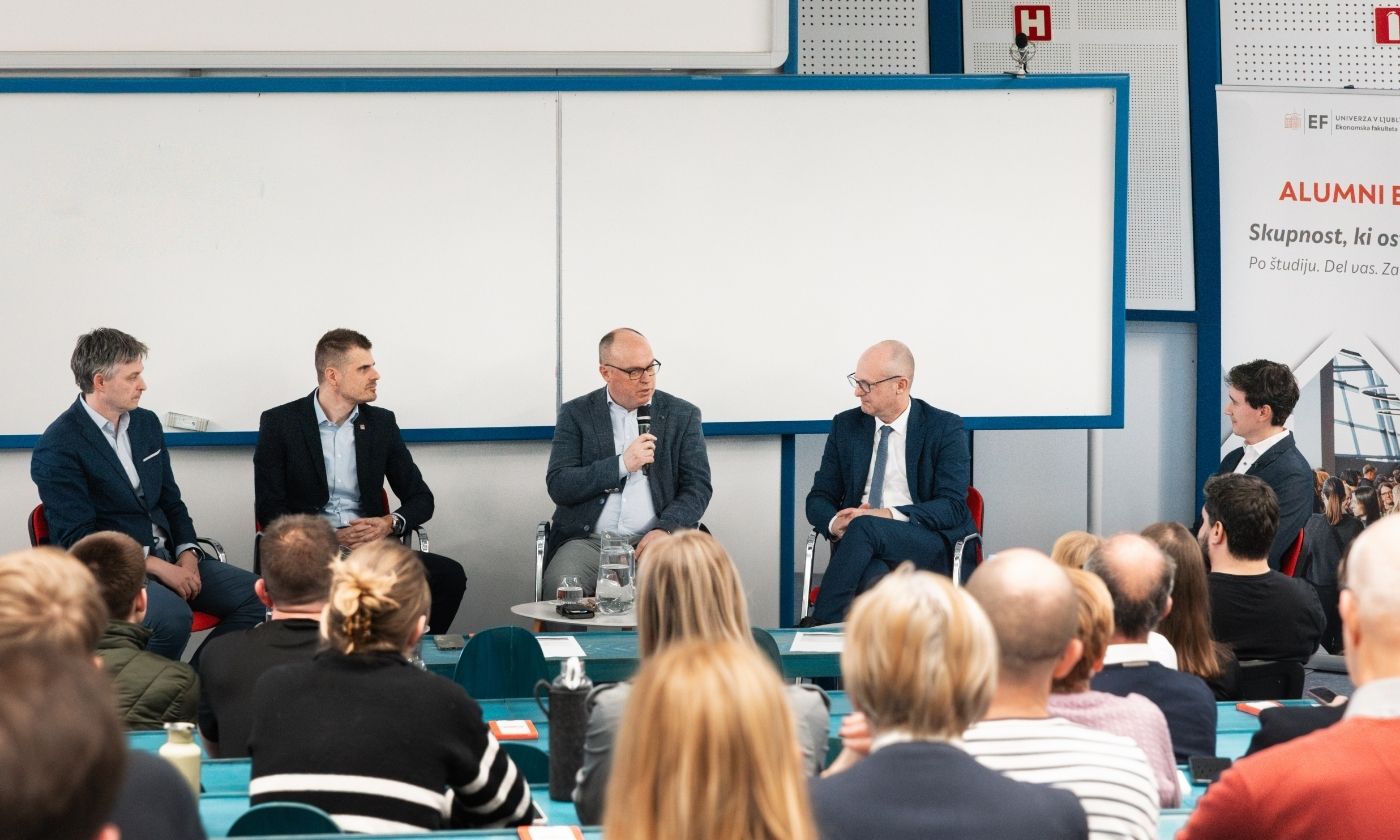
On Thursday, 5 February 2026, the SEB Alumni event “From Saver to Investor: Why Do We Delay Investing?” took place. Its purpose was to highlight the importance of financial literacy and to encourage reflection on individuals’ attitudes toward saving and investing. The event was moderated by Jure Ugovšek (Častnik Finance), and the discussion featured Primož Cencelj (Modra zavarovalnica), Matej Tadej Jerman (Generali Investments), Dan Podjed (Faculty of Arts), and Aljoša Valentinčič (School of Economics and Business).
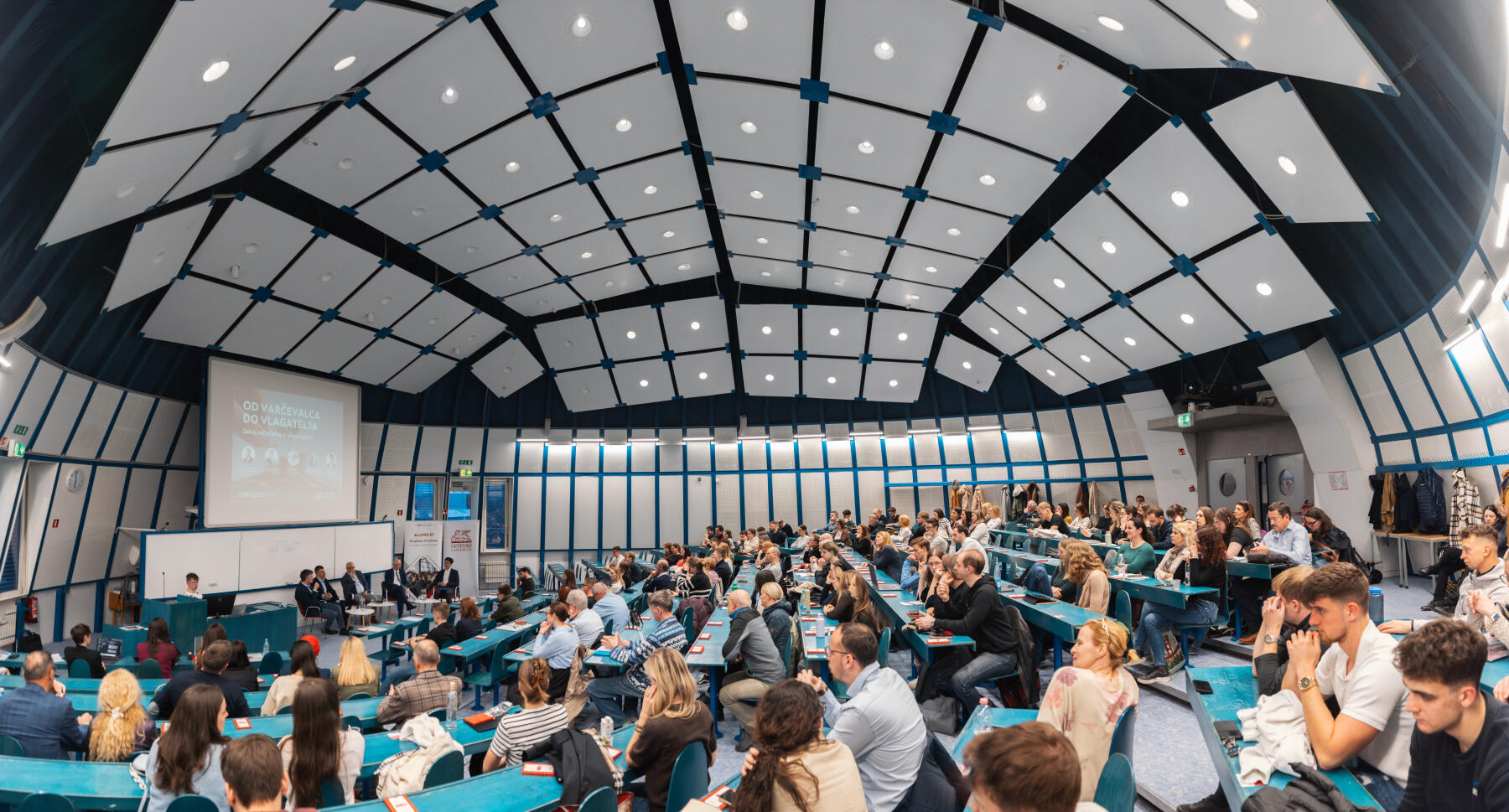
The event began with an introductory address and a short video that presented the key premises of the discussion. The central part of the event was a roundtable, where the speakers discussed why people often postpone saving and investing. They highlighted that the main factors are fear, the perception that investing is too complex, and a lack of financial literacy.
The discussion emphasized that money serves an important function of circulation and that, due to inflation of around 2–3% annually, its value decreases over time. Nevertheless, many people still keep most of their funds in bank accounts, which in the long run results in a loss of purchasing power. The speakers also pointed to the widespread popularity of investing in cryptocurrencies among Slovenians and stressed the importance of understanding basic financial concepts.
Special attention was given to financial literacy and education, with speakers noting that it would be sensible to include basic financial knowledge already in primary school education. More financially aware individuals have greater long-term potential to improve their financial situation. It was also highlighted that investing does not necessarily require large sums, as it is possible to start with minimal amounts, making it more accessible to a wider population.
The discussion also touched on pension savings, where two key aspects were emphasized: demographic structure and investing capital in companies to enable its growth. An interesting insight into participants’ thinking was provided by a survey in which the majority opted for a diversified investment portfolio rather than a property of equal value.
At the conclusion of the event, a special guest, Darko Đurič, joined the audience and further enriched the program with his contribution. This was followed by audience questions, which allowed for additional clarification of the discussed topics. The event successfully connected theoretical and practical aspects of finance and encouraged participants to reflect on more active management of their personal finances.
Author of the text: Ema Zajec