Alumni story: Laura Mlakar
Alumni story: Laura Mlakar

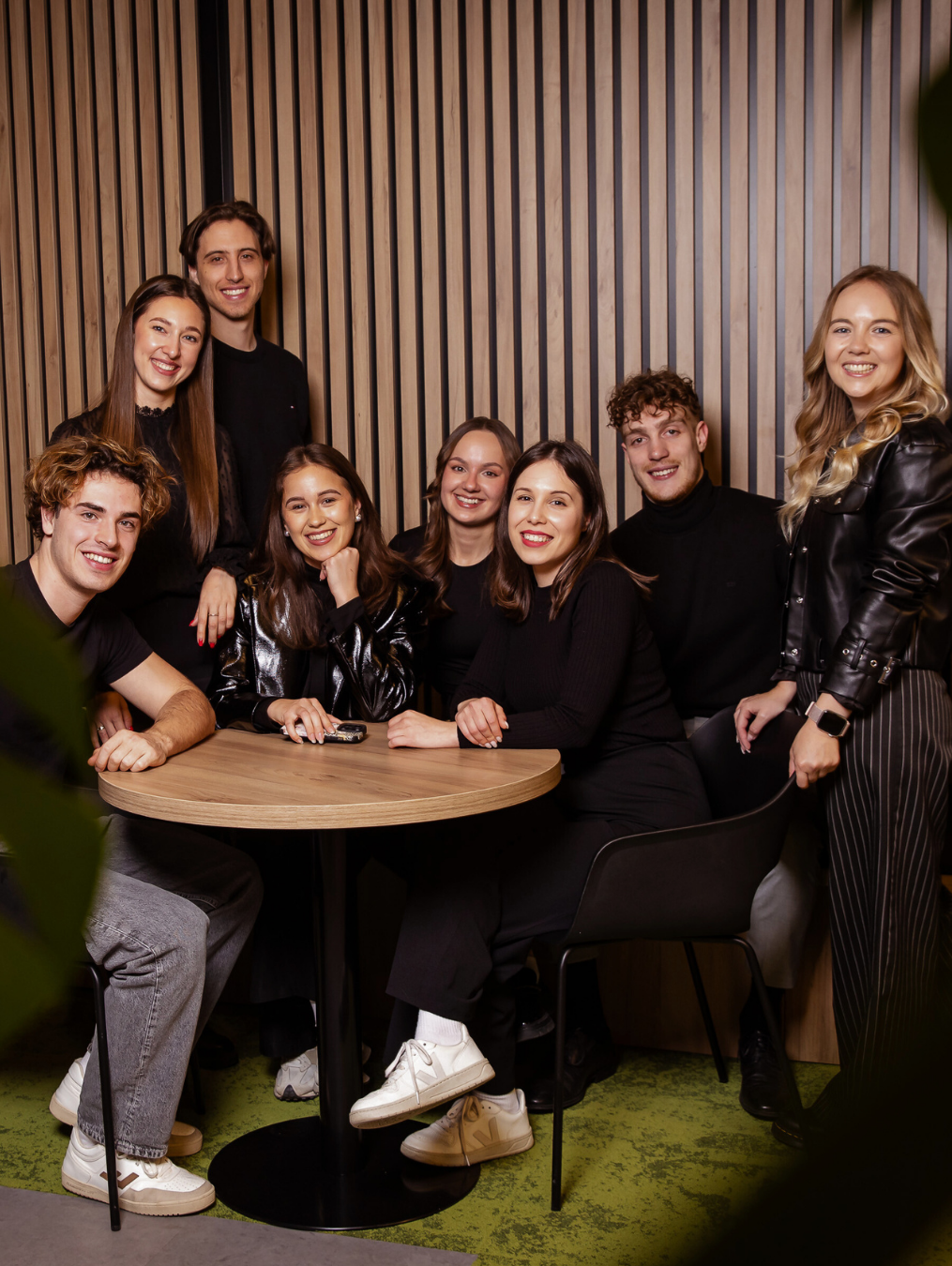
Laura Mlakar is one of those young entrepreneurs who grew up in an entrepreneurial environment, which is why she has carried an entrepreneurial drive within her since childhood. Her studies at the Faculty of Economics further encouraged her to put theoretical knowledge into practice as soon as possible. Already during her studies, she and a friend began building their first entrepreneurial story, and today they run a successful vertical video content agency, Createable, employing a ten-member team and collaborating with numerous companies.
Her view on entrepreneurship is clear: opportunities only arise when we dare to take the first step, explore new paths, and build relationships – both with people and with users.
Opportunities only arise when we dare to take the first step
How did your entrepreneurial journey begin? Did you feel this interest already when entering university?
My entrepreneurial interest appeared very early, even before high school. I knew that one day I would create something of my own, because creativity, freedom, and the possibility to build opportunities for yourself and others attracted me from a young age. My parents, both entrepreneurs, also had a strong influence on me, as through them I saw what entrepreneurship brings and what kind of life it can enable.
The Faculty of Economics was not the beginning of my entrepreneurial journey, but it quickly encouraged me to transfer knowledge into practice. Economics is a very broad field, so I believe it is crucial to test things already during your studies in order to discover what truly excites you.
Which experience from your student days has particularly stayed with you?
Due to the start of the pandemic, my study experience was quite unusual. For the first year and a half, we practically did not meet classmates in person. When student life finally began, I deeply appreciated opportunities for teamwork and practical challenges.
One experience that especially stood out was Business Hive, a three-day case study competition focused on solving real business challenges. It was intense, team-based, competitive, and above all very practical. You learn teamwork, standing out, networking, and rapid problem-solving. Similarly valuable were the courses in the entrepreneurship track, where we developed real business ideas and transferred theory into practice.
Together with your friend and later business partner Sara Tič, you created your first project, Bond Beyond Box, selling planners and gifts for couples. However, you soon realized that the product–market fit was not optimal. What was the most important lesson from this period?
The most important lesson was realizing how much we were limiting ourselves. At the beginning, Sara and I often questioned who we were “allowed” to contact and whether we would be considered interesting enough, which caused us to close many doors before they even had a chance to open. From that period comes a guiding principle that still stays with me today: “Let other people say no to you.”
Once you overcome the fear of rejection, the right doors begin to open. Rejection is inevitable in entrepreneurship, but when you accept it as a normal part of the process, it becomes much easier to move forward, test ideas, and quickly identify what has potential and what does not. This mindset allowed us to pivot in time and start building the foundations for today’s agency.
How did your collaboration with Sara and your first project begin?
I have known Sara since childhood, as our parents are long-time family friends. Even as children, we said that one day we would work together, although we could not imagine what that would look like in practice.
This became reality during our studies, at the time of the pandemic. I approached Sara and told her that we needed to start creating something, because “you cannot learn everything from theory.” I felt a strong desire to test entrepreneurship and gain hands-on experience, so I presented her with three ideas and invited her to test one together.
After initial attempts and rejections, we gradually shifted from our early projects into the TikTok world, where our approach slowly evolved into the vertical video content agency Createable. From the very beginning, we had clearly divided roles: Sara took over the creative side, while I focused on business development. This complementary approach enabled stable growth, faster decision-making, and a clear focus.
What does your agency do today and what does the video content creation process look like?
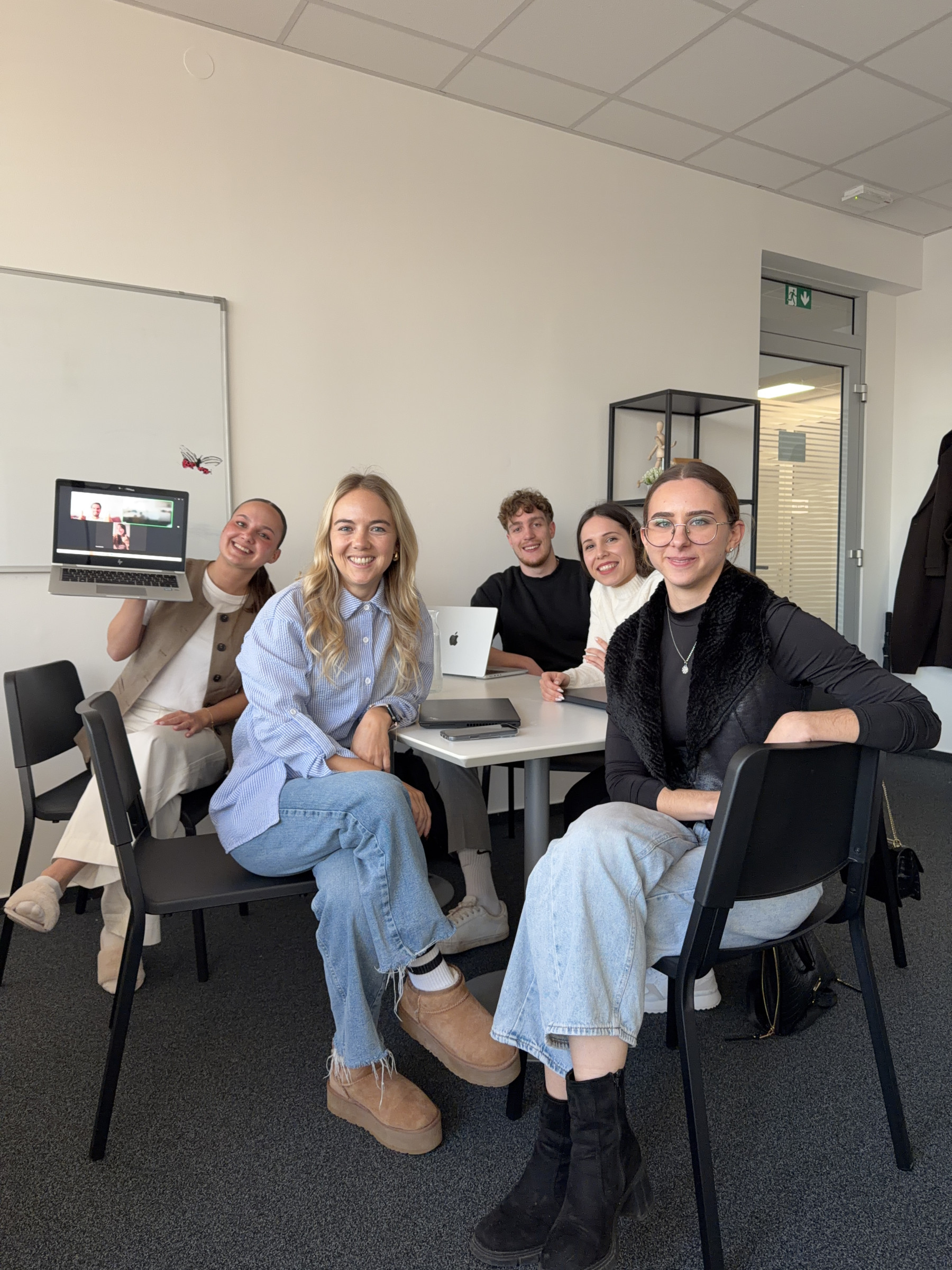
For the past three years, Createable has managed TikTok profiles for companies and created video content for other platforms, primarily Instagram reels. Currently, there are ten of us, and our goal is to develop into a full growth agency that helps companies with brand awareness, sales, communication, and profitability.
The content creation process is highly structured: we prepare a content strategy, write detailed scripts, organize one or two filming days per month, record and edit content, manage posts and comments, and regularly prepare reports and optimizations. Since digital platforms are extremely fast-paced and unpredictable, adaptability is key.
What are the challenges of being a young entrepreneur leading a team of ten people?
The biggest challenge is that Sara and I entered the agency world very young, at just 21 years old, which meant learning many things along the way, often through our own mistakes. In the beginning, we lacked solid foundations and clearly defined onboarding processes, so various mentors were extremely helpful in the early stages. We also had to learn delegation and trust, which is often the hardest step for perfectionists.
Open communication and clear expectations are essential. We encourage employees to express what they need, while we provide structure, direction, and regular feedback. Younger teams have the advantage of fast adaptability and a better understanding of social media dynamics, which companies highly value today.
How do Slovenian companies respond to TikTok and video content?
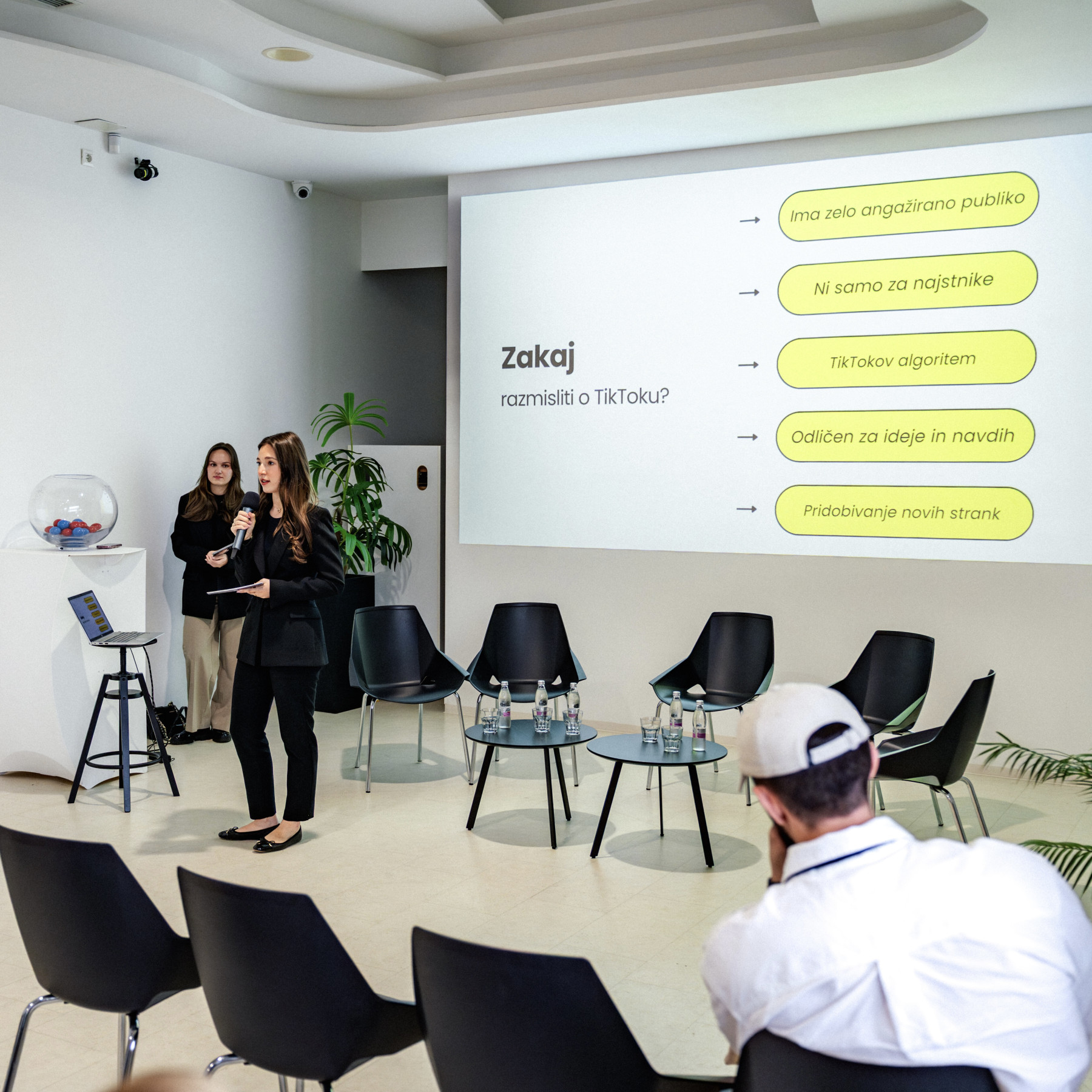
A significant shift is noticeable. TikTok has been present in Slovenia for around five years, yet until recently it was primarily used by smaller brands and creators, while larger companies remained hesitant. For a long time, there was a stereotype that the platform was intended only for young people or “non-serious” content.
In reality, TikTok is an extremely powerful tool for building relationships with users. We often first explain to companies that TikTok is not primarily a sales platform, but a space for building trust, visibility, and community. Once they understand this, numerous opportunities open up.
Since algorithms and trends on the platform change very rapidly, constant adaptability is essential. Our team spends a lot of time analyzing patterns, testing formats, and monitoring changes to continuously optimize content. Only in this way can we ensure that companies remain relevant and that their content truly reaches users where they are most present.
One of the mentors who significantly influenced your path was Sara Rotter Šešok, whom you met through a faculty mentoring program. How did her mentorship impact your personal and business development?
Sara’s mentoring approach brought a completely new perspective into my work and thinking. Instead of directly telling me what to do, she encouraged me with the right questions to think, evaluate, and make decisions independently. This helped me start thinking much more strategically and confidently shaping next steps.
Together, we created my personal development plan and outlined a five-year development framework – not only in terms of goals, but primarily in understanding which competencies I need to develop to achieve them.
This combination of challenge, support, and clear guidance was extremely valuable to me and strongly influenced both my personal and business development.
In conclusion: what personally drives you the most on your path, and what message would you leave to readers?
I don’t want to live an average life, and I view every step I take as part of a broader journey. Along the way, I’ve learned that the people you surround yourself with are just as important as the goals you pursue. Mutual support, encouragement, and belief in one another are often what carry you through moments of uncertainty.