A Comparative Discussion on the Adoption of Generative Artificial Intelligence in Africa and Europe
A Comparative Discussion on the Adoption of Generative Artificial Intelligence in Africa and Europe
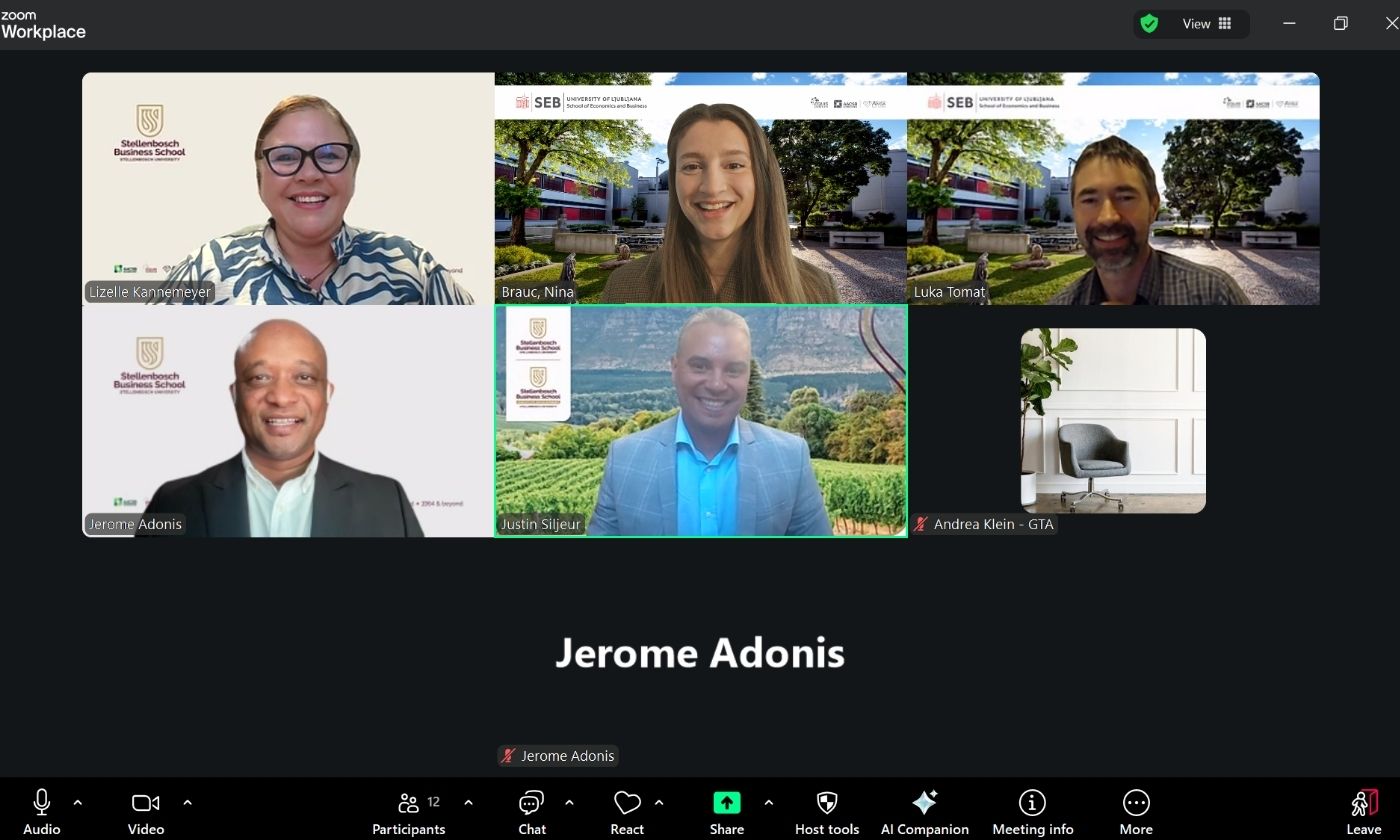
At the online event hosted by SEB Alumni and Stellenbosch Business School, experts discussed the adoption of generative artificial intelligence in organizations. They emphasized that success largely depends on an organizational and human-centered approach, building employee trust, encouraging experimentation, and addressing real business challenges.
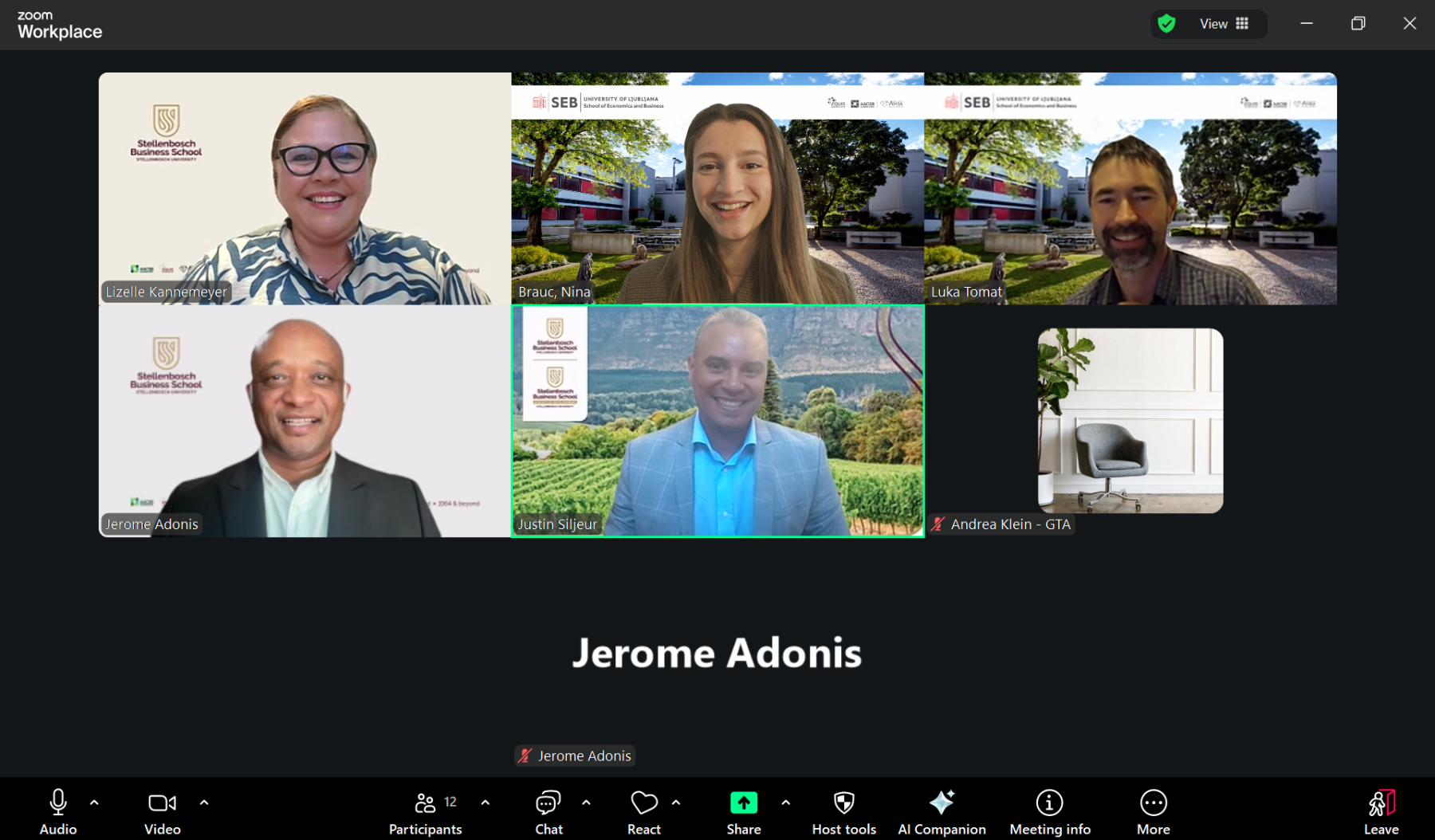
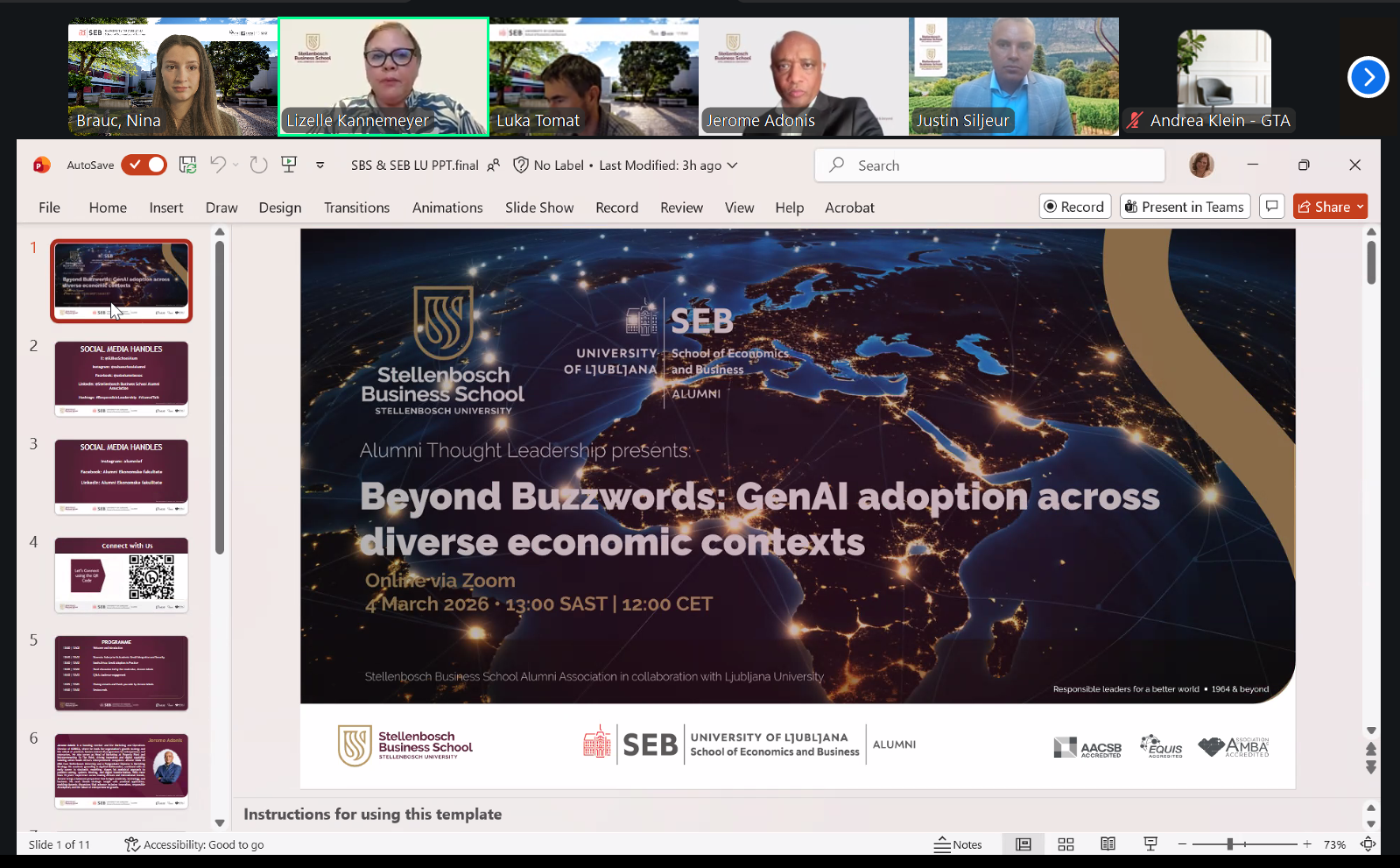
On Wednesday, March 4, 2026, the online event “Adoption of Generative Artificial Intelligence in Different Economic Environments” took place, co-organized by SEB Alumni and Stellenbosch Business School from South Africa. The event addressed key questions surrounding the adoption of generative artificial intelligence in organizations and businesses. Experts from both academia and practice participated, including Jerome Adonis, Justin Siljeur, Dr. Luka Tomat, and Raymond Crown. The discussion focused on how organizations can successfully integrate artificial intelligence into their processes, as well as the main opportunities and challenges involved.
One of the key takeaways from the event was that the adoption of artificial intelligence is not primarily a technological challenge, but rather an organizational and human one. The speakers emphasized that simply having access to AI tools does not guarantee their effective use. Successful implementation depends on employee trust, understanding of AI, and psychological readiness for change. Without these elements, organizations may face employee resistance or only achieve superficial use of the technology.
Justin Siljeur presented research on a model for implementing generative AI in companies. The model is based on a combination of strategic leadership and active employee involvement. Leadership must provide clear direction and support, while organizations should enable employees to experiment with new tools. Employees who are closest to day-to-day operations are often best positioned to identify opportunities for applying AI to solve real problems.
The presentation also outlined different roles of AI within organizations. Artificial intelligence can act as an assistant for administrative tasks, a strategic partner in data analysis and identifying business opportunities, or a creative tool for generating new ideas and content. One example highlighted a company that used data analysis and AI to uncover new market opportunities and successfully launch marketing campaigns with strong business results.
The speakers also introduced a framework for successful AI adoption in organizations. This framework includes encouraging employee experimentation, building trust in technology, establishing clear guidelines for AI use, and identifying practical use cases that deliver business value. It was particularly emphasized that large-scale transformations are often unsuccessful if they are not tied to specific organizational problems and needs.
Raymond Crown shared practical industry experience, highlighting the importance of building internal communities where employees can share their experiences with AI. Such an approach fosters learning, experimentation, and faster adoption of new technologies in work processes.
Dr. Luka Tomat pointed out an interesting trend: while the use of AI among individuals is rapidly increasing, this does not necessarily mean that organizations are adopting AI systematically. Many employees use AI for individual tasks, while comprehensive integration into business processes remains limited.
The event also highlighted regional differences in AI adoption. In Europe, discussions often focus on regulation and ethical considerations, whereas in Africa, AI is more frequently applied to address concrete social and economic challenges, such as improving agricultural productivity, education, and entrepreneurship.
The event concluded with the message that organizations should first identify the most pressing challenges within their processes and then experiment with AI to address them. Successful solutions can then be gradually scaled across the organization. The key takeaway was that artificial intelligence delivers the greatest value when used as a tool to enhance employees’ work and solve real business challenges.
Author: Marko Čadež Mačkić