What do I need to know before opening an Individual investment account?
What do I need to know before opening an Individual investment account?
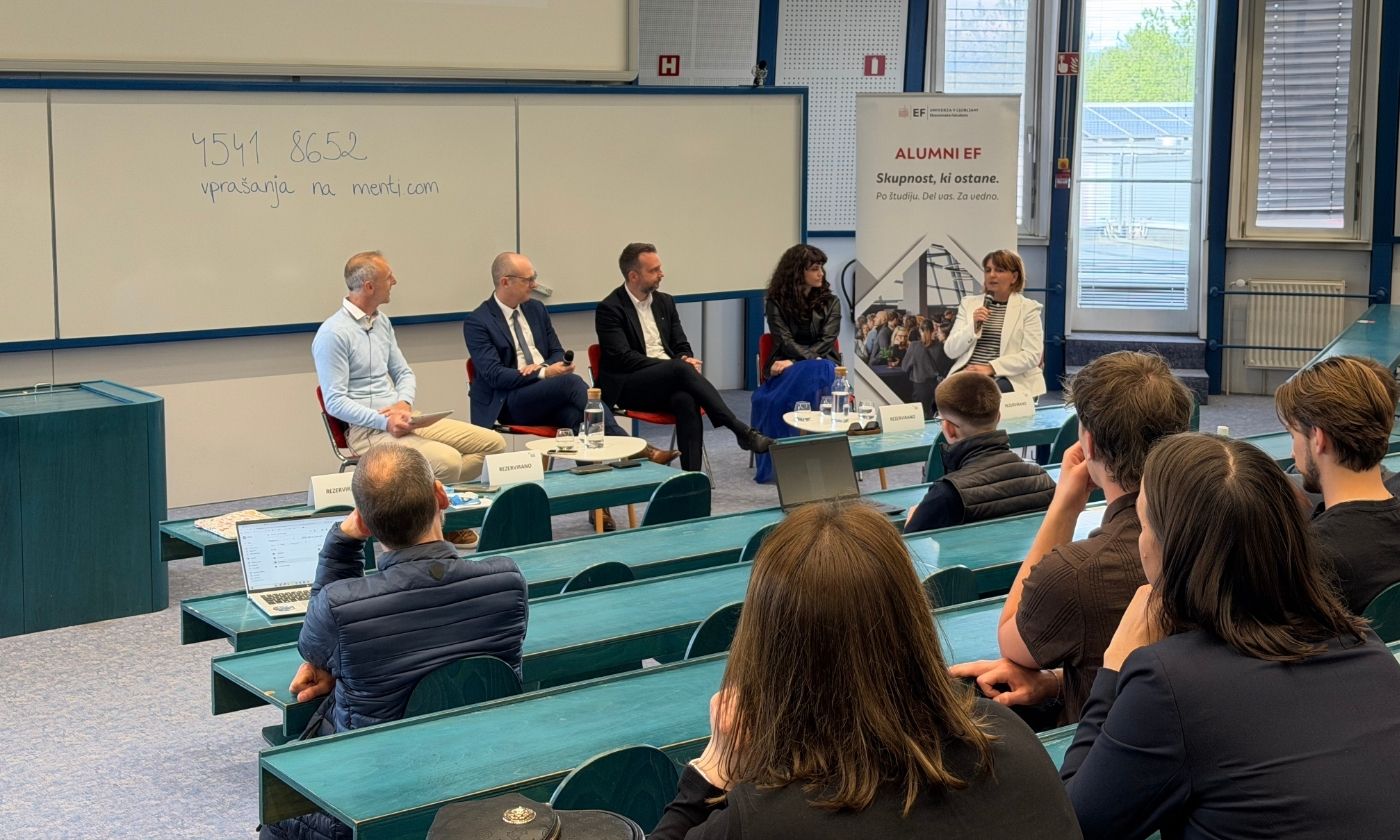
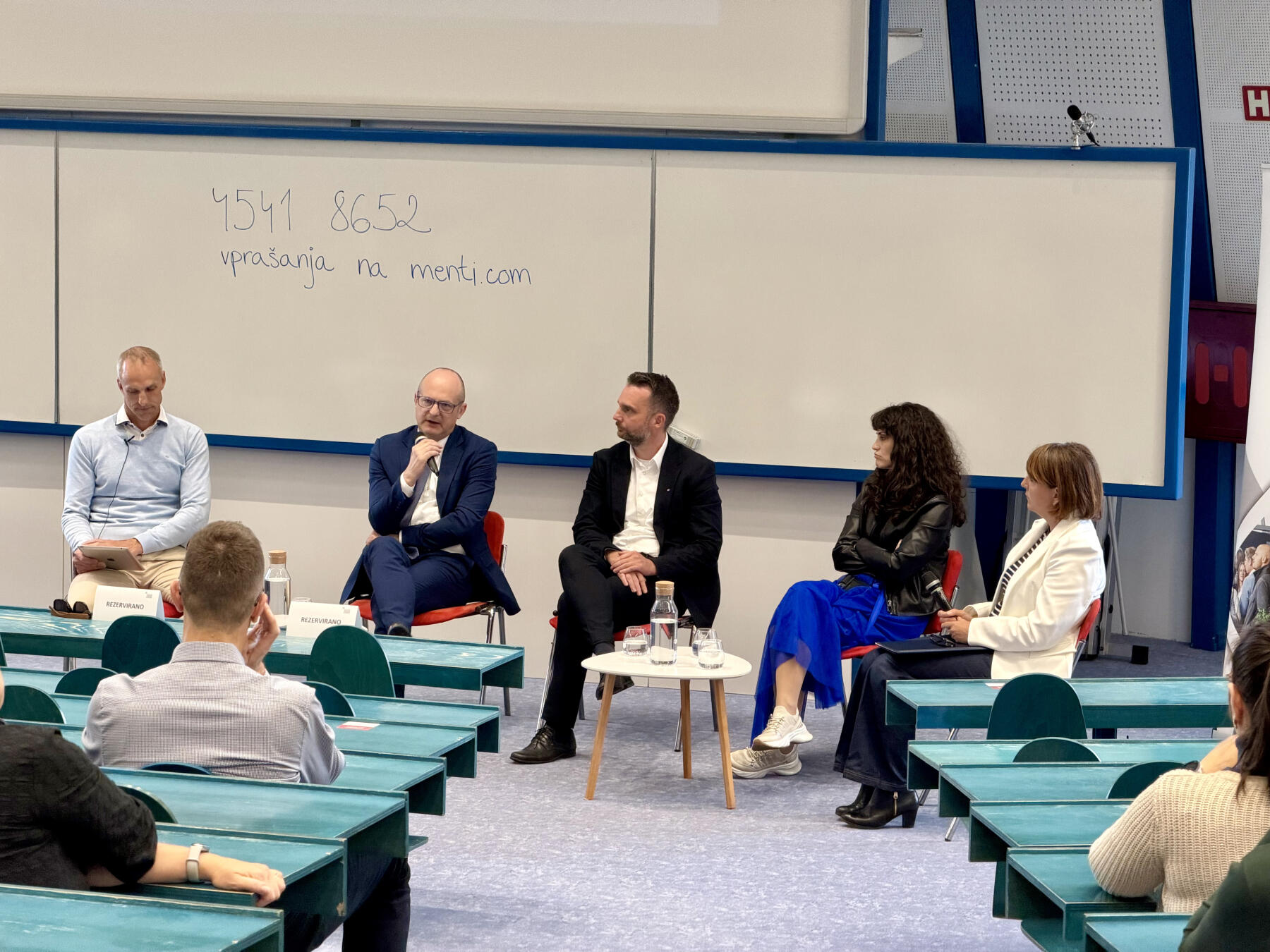
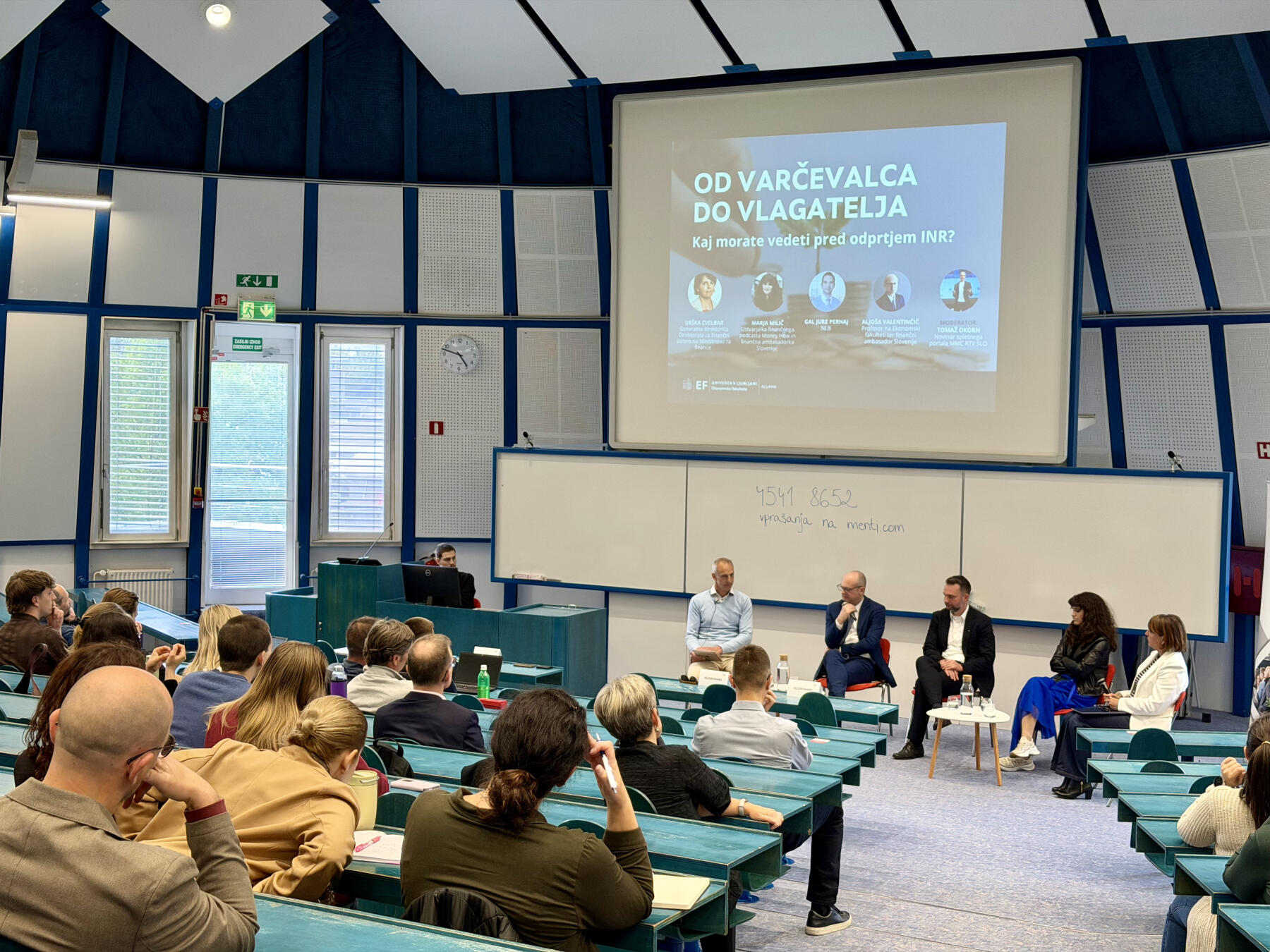
On 12 May 2026, Alumni EF hosted the event *From Saver to Investor: What You Need to Know Before Opening an INR Account*, where Urška Cvelbar, Marja Milič, Gal Jure Perhaj and Prof. Dr. Aljoša Valentinčič, together with moderator Tomaž Okorn, discussed individual investment accounts, their advantages, limitations, and the key questions investors should consider before opening one.
Slovenians keep a significant amount of money in bank accounts. According to the Bank of Slovenia, Slovenian households held more than EUR 27 billion in savings in July 2025. So much, in fact, that it is almost considered a national characteristic. We save carefully, consistently, and often for many years, yet at the same time we continue to leave most of our savings in accounts where inflation slowly, almost imperceptibly, erodes their value.
It is therefore no surprise that Individual Investment Accounts (INR in Slovenian) have attracted so much attention in Slovenia’s financial landscape. The government presents them as one of the key steps toward encouraging Slovenians to invest more instead of simply keeping money in banks. At first glance, the idea seems almost ideal: tax advantages, long-term investing, simplified administration, especially when filing tax returns, and the opportunity for individuals to gradually build their wealth.
Yet after only a few months, it is becoming clear that the question is no longer simply whether to open an Individual investment account, but rather: what do I need to know before opening one?
Is this really a product suitable for everyone? What do costs mean for smaller investments? What about the limited range of financial instruments? And are individuals truly prepared to take on the risks that investing brings?
These were precisely the questions discussed at the SEB Alumni roundtable From Saver to Investor: What You Need to Know Before Opening an INR Account, featuring Urška Cvelbar, Director-General of the Financial System Directorate at the Ministry of Finance, Marja Milič, creator of the financial podcast Money How and Slovenia’s Financial Ambassador, Gal Jure Perhaj, Head of Financial Instruments Trading at NLB, and Professor Dr. Aljoša Valentinčič from the School of Economics and Business, University of Ljubljana, also Slovenia’s Financial Ambassador. The discussion was moderated by Tomaž Okorn, journalist at MMC RTV SLO, who has been covering financial markets for more than two decades.
The opening part of the discussion already made it clear that Individual investment accounts are not just another financial product. Urška Cvelbar emphasized that the government aims to encourage a shift of savings from bank deposits into capital markets and strengthen individuals’ long-term financial stability. She repeatedly highlighted the importance of financial literacy and gradual, long-term investing in financial instruments.
The market’s initial response suggests that interest is strong. Nearly 10,000 accounts were opened within the first two months, which the speakers described as an important signal that Slovenians are beginning to think differently about investing than they did in the past.
As the discussion moved away from legislation and into real-life situations, it became evident where investors’ main concerns lie. Audience members were particularly interested in how much money it actually makes sense to invest, whether accounts are suitable for smaller monthly contributions, how important fees are, and how the limited range of financial instruments affects long-term investment strategies.
One of the biggest advantages of Individual Investment accounts remains the possibility of tax-free withdrawals after 15 years. According to the speakers, this long-term orientation is the core principle behind the entire product. Professor Dr. Aljoša Valentinčič stressed that young investors, in particular, have the advantage of time: “Young people have time to recover even after major market downturns.” At the same time, he was not speaking only about INR accounts, but more broadly about the fundamentals of long-term investing and building diversified “baskets” of financial instruments.
At the same time, the speakers repeatedly pointed out that accounts are not necessarily the optimal solution for every individual. Marja Milič highlighted the issue of costs for smaller investment amounts and stressed that people should fully understand trading fees, account management costs, and portfolio diversification before opening an account. For lower investment amounts, certain alternatives may in some cases be more suitable.
Another important topic was the limited range of financial instruments available within the accounts. Different providers currently offer access only to selected markets or specific ETFs, which may affect portfolio diversification and investment strategies. Part of the discussion therefore focused on the fact that some globally popular ETFs are currently not included among the eligible instruments. Nevertheless, the speakers emphasized that it is still possible to create a sufficiently diversified portfolio within the existing selection of instruments that can effectively support long-term investment goals.
Gal Jure Perhaj from NLB noted that interest in Individual Investment Accounts is growing rapidly in practice, especially among individuals who have never invested in capital markets before. According to him, many investors are opening trading accounts for the first time, which is why transparency, accessibility, and understanding of the product itself are becoming increasingly important.
One of the more important themes of the discussion was also investor responsibility. Most Individual investment accounts providers operate on a self-directed investment model without individual investment advice. This means that providers mainly offer the infrastructure for opening accounts, executing orders, and administrative support, while the decision of where to invest largely remains the responsibility of the individual investor.
The discussion also touched on children, young investors, and retirees. Individual investment accounts can also be opened for minors, which many see as an attractive opportunity for long-term savings for children’s future. The speakers repeatedly emphasized the power of compound interest and the fact that time is often an investor’s greatest ally. They also highlighted one important feature: an individual can open an Individual investment account only once in their lifetime. Once closed, it cannot be reopened.
For older investors and retirees, however, the key question often shifts toward the investment horizon. Is a 15-year period long enough for the tax advantages to truly make a difference? As the speakers pointed out, there is no universal answer, the decision depends largely on an individual’s stage of life, goals, and personal attitude toward risk.
The event concluded with audience questions, where participants raised very practical dilemmas ranging from child benefits, housing loans, and investing for children to questions about fees, ETFs, and investment psychology. This part of the discussion clearly showed that finance no longer feels as distant to people as it once did. The conversation became honest, practical, and deeply connected to everyday life.
At one point, one of the speakers said something very simple: “The biggest mistake is not starting at all.” And I believe that sentence captured the essence of the entire afternoon.
Perhaps Individual investment accounts are not currently the perfect solution for everyone. That is exactly why previous From Saver to Investor events have also explored topics such as stocks, bonds, mutual funds, real estate, precious metals, and cryptocurrencies. There are many opportunities available, what matters most is approaching decisions thoughtfully.
As Professor Dr. Aljoša Valentinčič has often emphasized: just as many people seek a trainer when going to the gym, investors should also seek quality information and professional advice. The internet today is saturated with information, and among it there is also misinformation. That is precisely why it is our responsibility to educate ourselves and build financial literacy, so that we can critically evaluate and effectively filter the information we encounter.
Author: Nina Brauc